
As a Registered Dietitian and Certified Diabetes Care and Education Specialist with 16 years of clinical experience, I’ve worked with hundreds of adults trying to improve their blood sugar, navigate prediabetes or type 2 diabetes, lose unwanted weight, and manage hormone-related changes like perimenopause.
One question I hear all the time is: “Are smoothies good for blood sugar?”
My answer is usually, yes…if they’re built correctly.
The truth is that smoothies get a bad reputation because many are essentially milkshakes disguised as health food. On the flip side, a well-balanced smoothie can be an excellent option for breakfast, a post-workout meal, or even lunch on busy days.
I’m a big believer that blood sugar management is more about addition than restriction. Instead of obsessing over what you need to eliminate, I encourage people to focus on what they can add to create more balance, such as protein, fiber, healthy fats, vegetables, and nutrient-dense foods.
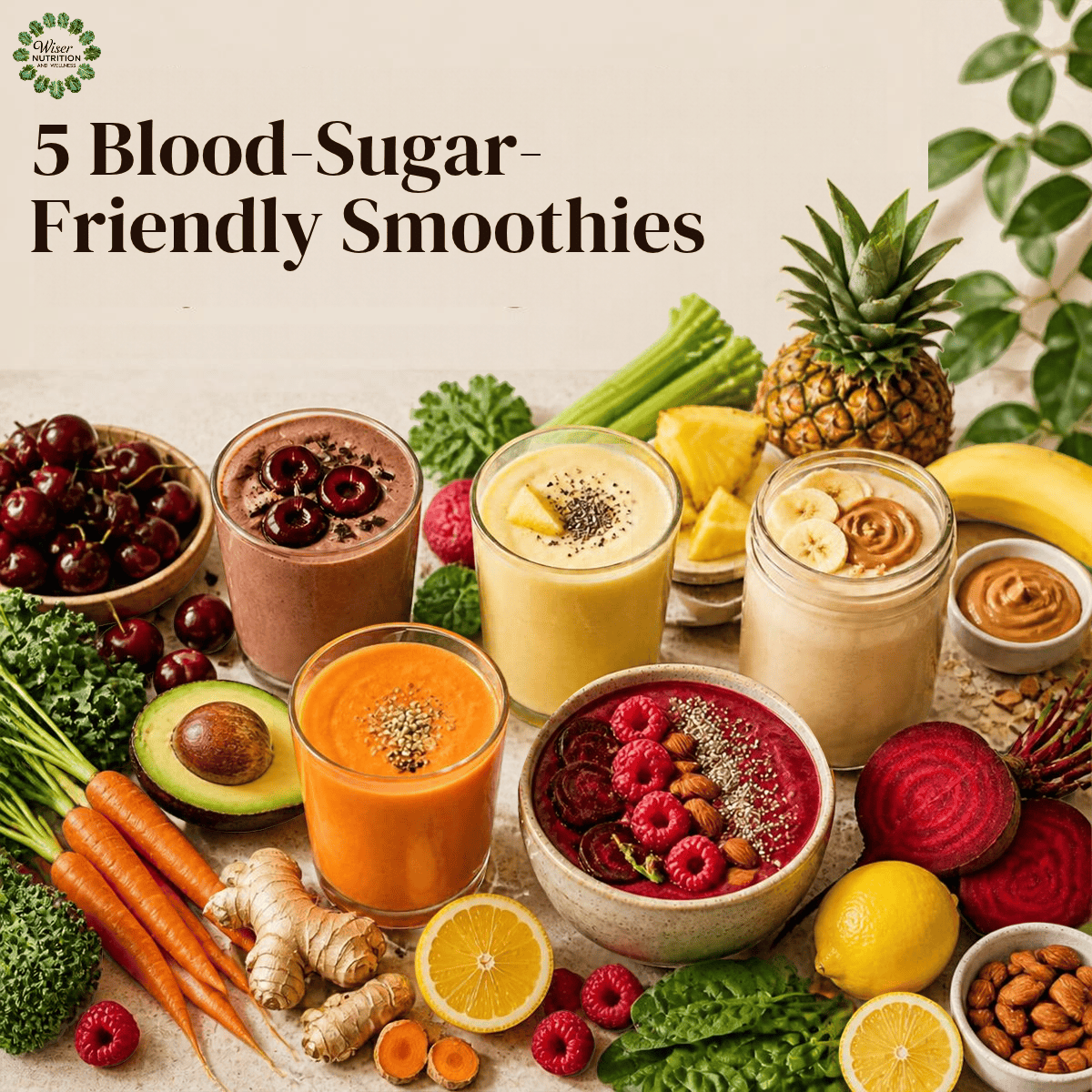
Today, I’m sharing five blood-sugar-friendly smoothies I actually make myself, along with what makes them work.
What Makes a Smoothie Blood-Sugar-Friendly?
A blood-sugar-friendly smoothie doesn’t have to be low-carb.
Let’s get that myth out of the way right now.
Fruit isn’t the enemy. Carbohydrates aren’t the enemy. In fact, nutritious carbohydrates can absolutely be part of a healthy smoothie.
The key is balance.
When I’m building a smoothie, there are a few non-negotiable components I try to include.
Protein
Protein helps slow digestion, promotes fullness, supports muscle maintenance, and can help reduce blood sugar spikes after meals.
Some of my favorite smoothie protein sources include:
- Ultra-filtered milk
- Greek yogurt
- Kefir
- Protein powder
- Collagen peptides (alongside additional protein sources)
Other ways you could add protein also include blending cottage cheese or silken tofu into a smoothie.
Fiber
Fiber slows digestion and carbohydrate absorption, helping support more stable blood sugar levels.
Great fiber-rich smoothie ingredients include:
- Chia seeds
- Flax seeds
- Hemp seeds
- Avocado
- Leafy greens
- Berries
- Beets
- Vegetables
Healthy Fats
Healthy fats help increase satiety and create a more balanced meal.
Some of my go-to additions include:
- Avocado
- Nut butters
- Hemp seeds
- Chia seeds
- Nuts
- Flax seeds
Fruits and Vegetables
I always encourage clients to stop thinking of fruit as something to fear.
Fruit provides fiber, vitamins, minerals, antioxidants, and yes, carbohydrates. The goal isn’t to avoid carbohydrates altogether. It’s to combine them with protein, fiber, and healthy fats for a more balanced blood sugar response.
Common Smoothie Mistakes I See in Practice
Over the years, I’ve talked with countless clients who were shocked to learn that their “healthy” smoothie wasn’t helping them reach their goals.
One of the biggest mistakes I see is assuming all smoothies are nutritious… and honestly, a lot of it surrounds the marketing around them.
Many store-bought and smoothie-shop options contain:
- Added sugars
- Juice-based smoothie bases
- Minimal protein
- Very little fiber
- Carb counts that easily exceed 100 grams in a single serving
I often recommend taking a closer look at ingredient lists if you’re ordering smoothies from a restaurant or purchasing pre-made versions.
One client I worked with was wearing a continuous glucose monitor and noticed that her blood sugar was consistently climbing quite high after breakfast. When we reviewed her morning smoothie, we discovered it contained very little protein.
Instead of eliminating the smoothie altogether, we made a simple change.
She either added protein powder directly to the smoothie or paired it with a couple of boiled eggs.
The difference was remarkable.
Her post-meal blood sugar response improved significantly, she stayed full until lunch, and those afternoon cravings she’d been fighting largely disappeared.
That’s why I’m such a strong believer that blood sugar management isn’t about removing every carbohydrate from your diet. It’s about creating balanced meals that work with your body.
1. Chocolate Cherry Smoothie
This is my absolute favorite smoothie.
What you’ll find in it:
- Ultra-filtered milk
- Spinach or kale
- Unflavored collagen peptides
- Avocado
- Unsweetened cocoa powder
- Frozen dark sweet cherries
To me, this smoothie tastes like a treat. It’s rich, creamy, chocolatey, and satisfying enough that I don’t feel like I’m sacrificing anything.
This is one I often make on busy work mornings because it keeps me full until lunch and provides steady energy throughout the morning.
Why It’s Blood-Sugar-Friendly
- Protein from milk and collagen
- Fiber from cherries, avocado, and greens
- Healthy fats from avocado
- Nutrient-rich carbohydrates from fruits and vegetables
The combination helps create a more gradual blood sugar response while keeping me satisfied for hours.
2. Pineapple Kefir Smoothie
This is one of my favorite smoothies for supporting both gut health and blood sugar.
What you’ll find in it:
- Plain kefir
- Celery
- Turmeric root
- Ginger root
- Chia seeds
- Coconut water
- Spinach
I love the flavor profile of this smoothie. It has just the right amount of sweetness, spice, and tartness to keep things interesting.
Depending on the day, I may enjoy this as breakfast or as part of a post-workout meal.
Why It’s Blood-Sugar-Friendly
- Protein from kefir
- Fiber from vegetables and chia seeds
- Healthy fats from chia seeds
- Prebiotics and probiotics that support gut health
- A balanced combination of fruits and vegetables
It’s one of those smoothies that makes me feel energized and refreshed while still being satisfying.
3. Elvis Smoothie
This smoothie proves that balanced nutrition doesn’t have to be complicated.
What you’ll find in it:
- Ultra-filtered milk
- Banana
- Peanut butter
- Chocolate protein powder
Fun fact: I used to absolutely dislike bananas. Thankfully, this smoothie isn’t overwhelmingly banana-flavored.
It’s probably one of the easiest recipes in my rotation and comes together in just minutes.
I often recommend this type of smoothie to clients who feel overwhelmed by complicated recipes.
Why It’s Blood-Sugar-Friendly
- Protein from milk and protein powder
- Healthy fats from peanut butter
- Fiber from banana
- A balanced mix of protein, fat, and carbohydrates
This is also a great option after exercise when your body benefits from both protein and carbohydrates.
4. Carrot & Ginger Protein Smoothie
If I’m looking for something a little different from my usual smoothie rotation, this is often the one I reach for.
What you’ll find in it:
- ¾ cup milk (I usually use ultra-filtered milk, but vanilla almond milk works well too)
- Carrots
- Orange
- Unflavored or vanilla protein powder
- Hemp seeds (flax seeds work too)
- Fresh ginger root
- Ground turmeric
I love this smoothie because it’s bright, refreshing, and a little different from my typical go-to options.
It’s also packed with vitamin C, making it a particularly appealing choice during cold and flu season. Bonus points if you add a squeeze of fresh lemon juice.
This would typically be a breakfast option for me, although depending on my hunger level, I may pair it with something else.
Why It’s Blood-Sugar-Friendly
- Protein from the protein powder
- Healthy fats from hemp seeds
- Fiber from carrots and orange
- A balanced combination of carbohydrates, protein, and fat
The result is a refreshing smoothie that supports energy and satiety without sending blood sugar on a rollercoaster ride.
5. Raspberry Beet Smoothie Bowl
When I have a little extra time to sit down and enjoy breakfast, this is one of my favorites.
What you’ll find in it:
- Frozen raspberries
- Frozen beet
- Pitted dates
- Hemp seeds (or flax seeds)
- Plain Greek yogurt
- Unsweetened shredded coconut
- Slivered almonds
What I love most about this recipe is the texture.
The combination of creamy, crunchy, and chewy elements makes it feel more substantial than a typical smoothie.
I’ve even enjoyed it as an alternative lunch option when leftovers aren’t available.
Why It’s Blood-Sugar-Friendly
- High-fiber ingredients like raspberries and beets
- Protein from Greek yogurt and hemp seeds
- Healthy fats from almonds, coconut, and seeds
- A well-balanced mix of macronutrients
For many people, it provides enough protein and fiber to function as a complete meal.
My Smoothie Staples
One reason I love smoothies is that they’re incredibly flexible.
I’m definitely the type of person that uses recipes more for inspiration as opposed to strictly following them. Sometimes I simply use what I have available and build from there.
The ingredients I almost always keep on hand include:
- Collagen peptides
- Protein powder
- Milk
- Frozen fruit
- Chia seeds
- Avocado
- Leafy greens
With just a handful of staple ingredients, it’s easy to create a balanced smoothie that fits your preferences and supports healthy blood sugar.
The Bottom Line
A blood-sugar-friendly smoothie isn’t necessarily low-carb.
Instead, it’s balanced.
The most satisfying smoothies contain:
- Protein
- Fiber
- Healthy fats
- Fruits and vegetables
When those pieces come together, smoothies can help support steadier blood sugar, reduce cravings, improve satiety, and make healthy eating more convenient on busy days.
And perhaps most importantly, they can actually taste good.
Because sustainable nutrition isn’t about restriction. It’s about finding simple, enjoyable ways to support your health.
Want More Blood-Sugar-Friendly Smoothie Ideas?
I’ve put together a free Blood-Sugar-Friendly Smoothie Recipe Pack featuring 10 balanced smoothie recipes designed to support healthy blood sugar while still tasting delicious.
If you’re looking for more easy breakfast ideas, satisfying snacks, or simple ways to add more balanced nutrition to your day, download your free copy and start blending below!
Leave a Reply